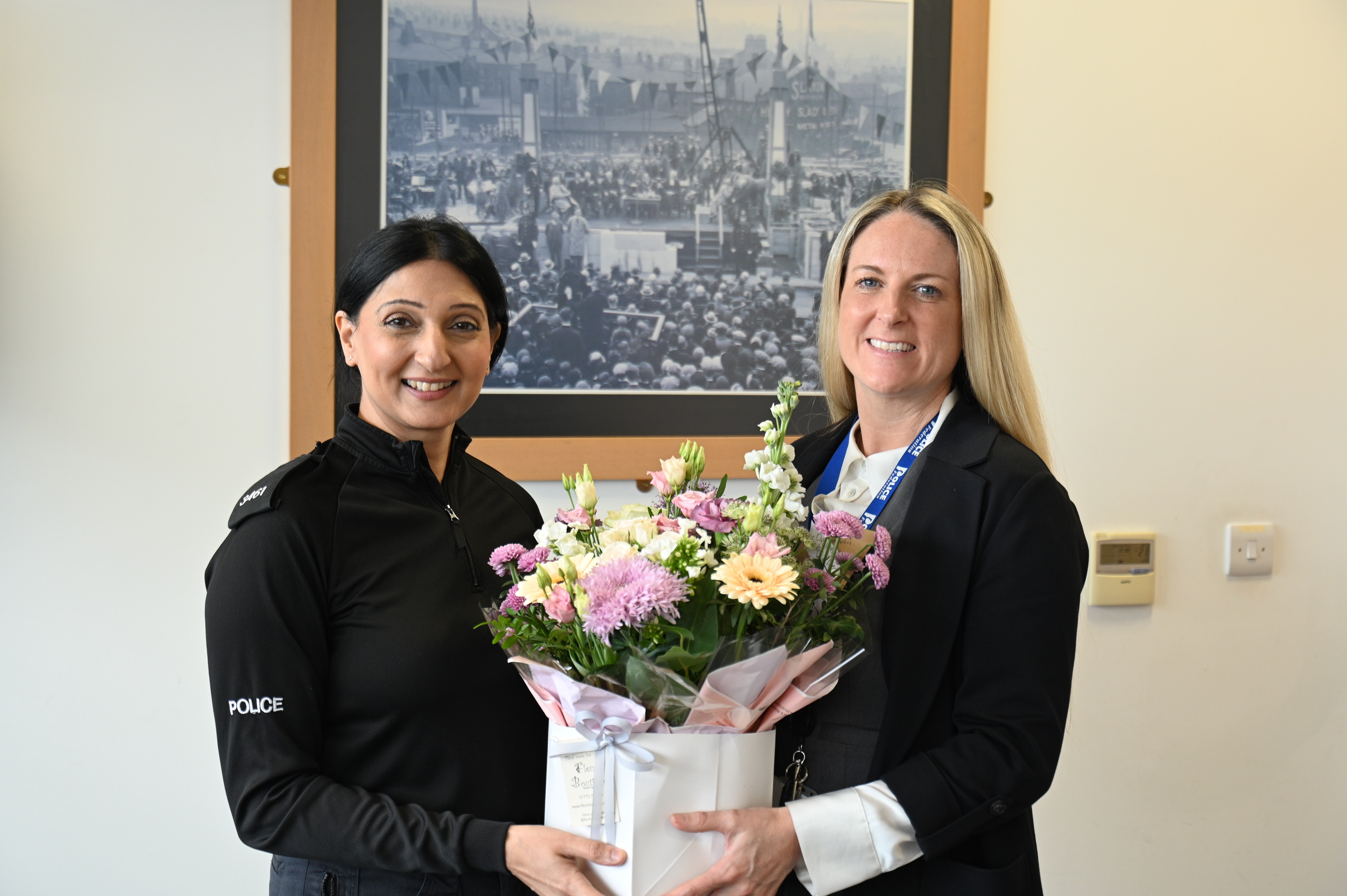
Within women in policing there are shining stars the Police Federation of England and Wales is proud to honour every year with the Outstanding Contribution to Women in Policing Award. This year’s award was hotly contested with nominations flooding in from Federation branches across England and Wales. But there was one clear winner – PC Nikki Nabi of Lancashire Constabulary.
Every day thousands of women up and down the country book on duty, playing their major part in the protection of the public and serving of their communities. Ever since the first female police officer Edith Smith was sworn into office in 1915, women have made an immeasurable contribution to the development of British policing.
Within women in policing there are shining stars the Police Federation of England and Wales is proud to honour every year with the Outstanding Contribution to Women in Policing Award, which this year was sponsored by MetFriendly. The award was created in memory of Greater Manchester Police constables Nicola Hughes and Fiona Bone who were killed on duty on September 18 2012.
This year’s award was hotly contested with nominations flooding in from Federation branches across England and Wales. But there was one clear winner – PC Nikki Nabi of Lancashire Constabulary.
“I was very honoured and privileged,” said Nikki. “To be told I’d won a national award was incredible – but what meant even more was the fact that it was in memory of Nicola and Fiona. To be associated with their bravery and sacrifice is truly humbling.”
Nikki’s win adds to a remarkable achievement for Lancashire Constabulary, which has now received this award more times than any other force in England and Wales – winning it three times since its inception. This repeated recognition highlights the force’s continued commitment to championing gender equality, inclusion, and innovation in policing.
With over 20 years of service, Nikki’s journey took a pivotal turn in 2021 when she joined the Police Uplift Programme, working to increase recruitment into the police. Having spent most of her career in response policing, this role was a step into the unknown. But as she began sharing her story as both a police officer and a mother, she found it resonated deeply with women in the community.
Her outreach helped dispel common misconceptions about policing and created an open dialogue – particularly with women from diverse backgrounds. One of the most significant barriers she uncovered was the Job-Related Fitness Test, widely known as the “bleep test”.
Nikki discovered the test, which falls late in the recruitment process, left little time for preparation and had a high failure rate. To address this, she introduced mock bleep tests earlier in the process, allowing candidates to assess their fitness in a low-pressure environment. Held at police headquarters, the sessions also helped familiarise applicants with the setting, reducing anxiety.
“I kept it all very positive,” she said. “It wasn’t about passing or failing – it was about understanding their fitness level on the day and giving them time to improve.”
The change led to a noticeable increase in success rates and drew interest from other forces. Building on that success, Nikki launched community-based bleep test events – fun, informal sessions where women could try the test, meet female officers, and have honest conversations about policing careers.
One such officer, Yasmeen Ahmed, met Nikki for the first time in her local park and had never even considered a career in police before. “I was at the local park one day and saw Nikki working as part of one of her uplift programmes, an Asian female like me, who was a police officer.
“I was instantly inspired and went over to talk to her; she had a beaming smile. She was so helpful and inspiring. I’m proud to say I am now a Lancashire Police officer. If it had not been for Nikki, I don’t feel I would have ever considered that I could have been a police officer, and throughout my career so far, she has been so helpful.”
But her work didn’t stop there. Nikki also tackled cultural and religious barriers, particularly regarding the wearing of the hijab. When women asked if they could wear a hijab as a police officer, Nikki knew the answer was yes but also recognised the lack of a designated uniform option.
Determined to change this, she formed a focus group of Muslim women officers, collaborated with clothing suppliers, and drew on her own frontline experience to help design three hijab styles that were both practical and respectful.
These designs acknowledged the personal religious journeys of individual officers and are now officially offered to Muslim women joining the force, whether as police officers, PCSOs, or staff.
Through her work with the Workforce Representation Team, Nikki has not only improved recruitment processes but has also redefined how policing connects with underrepresented communities.